
BLOG
More related information
- Home
- SUCCESS STORIES
- Success Stories
- Japan | Enhancing Disaster Response with IoT Asset Tracking and Power Status Visibility
Japan | Enhancing Disaster Response with IoT Asset Tracking and Power Status Visibility
December 30,2025
Highlights
- Visualizes nearby emergency power sources during large-scale disasters and power outages.
- Enables faster access to power support for people who rely on medical devices.
- Leverages enterprise-owned electric equipment to strengthen community-level disaster resilience.

This case study addresses a critical challenge faced during large-scale disasters: how to secure emergency power supply when public power infrastructure is disrupted. Centered in Miyagi Prefecture, Japan, logistics operators and solution providers collaborated to build a framework that enables enterprises to function as emergency power hubs during disasters.
Particular attention was given to vulnerable populations, such as individuals using life-sustaining medical devices at home and disability support facilities, where even short-term power outages can pose life-threatening risks. The project focused on ensuring timely access to power availability information when it matters most.
Goal
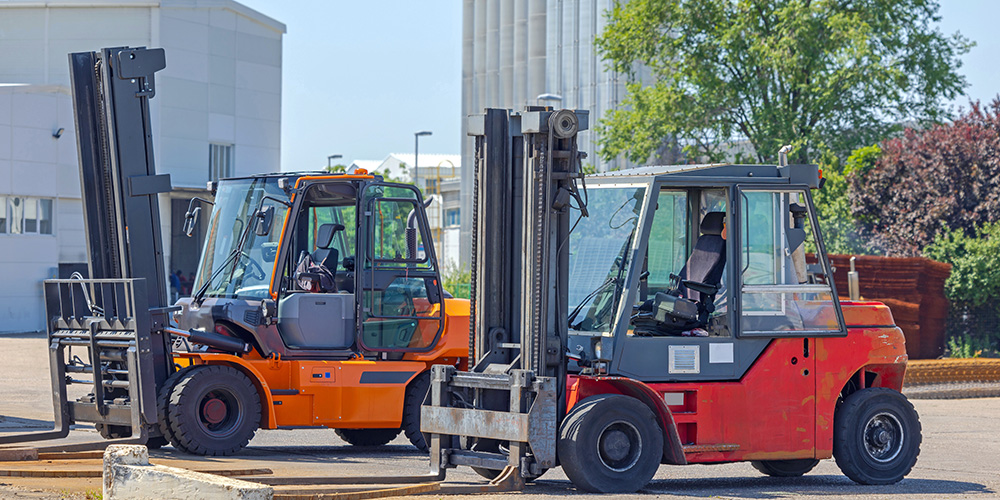
The objective of this project was to establish a mechanism that allows communities to quickly identify and share available power resources during disaster-induced outages. By utilizing batteries from electric forklifts and repurposed golf carts already used in daily business operations, the solution aimed to provide continuous visibility into where power is available and how much capacity exists—both in normal conditions and during emergencies.
Challenges
In the event of major disasters, power infrastructure is often among the first systems to fail. For individuals who depend on medical equipment, even brief outages can become life-threatening emergencies.
Conventional emergency power solutions made it difficult to immediately identify where usable power sources were located, delaying decision-making and emergency response. The lack of real-time visibility significantly hindered rapid power allocation during critical situations.
SYSTECH’s Solution
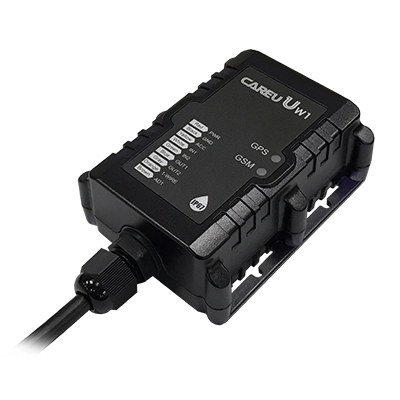
SYSTECH deployed the UW1 asset tracker to support real-time power visibility and coordination, even during disaster scenarios.
UW1 was installed on backup power assets such as electric forklifts with large-capacity batteries and repurposed golf cart batteries. These distributed power resources were transformed into centrally managed and shareable Power Donors, enabling organizations to contribute emergency power during crises.
By continuously collecting location and power status data through UW1, the system maintains up-to-date power visibility under normal conditions. During disasters, available power donor locations can be displayed on a map, enabling rapid, informed decisions without relying on manual checks or ad-hoc communication.
Results
As a result of this initiative, multiple warehouse and logistics companies in Miyagi Prefecture joined the Power Donor network, creating an environment where people in need of electricity can easily access power availability information even before disasters occur.
The partner’s Battery Management System Cloud (BMSC) solution evolved into the Power Donor platform and gained public recognition through inclusion on Sendai City’s disaster prevention portal, regional newspaper coverage, and television features. The solution has also been deployed across three disability support facilities in Miyagi Prefecture.
Furthermore, logistics companies from Tokyo and Miyagi Prefecture, together with key stakeholders, established the Power Donor Association. Major Japanese forklift battery manufacturers and the Japan ALS Association have also joined, positioning this initiative as a scalable, collaborative model for disaster prevention and community resilience.
Related Products
Article Classification
Recent Articles
- Taiwan|How Governments Digitally Manage Long-Term Care Transportation Services
- Japan | Enhancing Disaster Response with IoT Asset Tracking and Power Status Visibility
- Peru|Tracking Oil Tank Trailers in High-Risk Environments
- Saudi Arabia|Tracking and Securing High-Value Containers in International Freight Operations
- Taiwan|Real-Time Fleet Tracking for Regulated Aggregate and Soil Transportation